
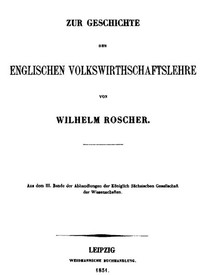
Zur Geschichte der englischen Volkswirthschaftslehre by Wilhelm Roscher
Okay, let's be clear: this isn't a novel. The title translates to 'On the History of English Political Economy,' and it's exactly what it says on the tin. But don't let that scare you off. Think of it as a guided tour through the minds of the people who shaped how England—and later, much of the world—thought about wealth and work.
The Story
Roscher takes us on a journey from the Middle Ages to his own time in the 1800s. He walks us through the major shifts in economic thinking. We start with medieval thinkers who saw economics through a moral lens, then move to the mercantilists who believed a nation's power came from hoarding gold. Finally, we meet the classical economists like Adam Smith, who argued for free markets and individual liberty. Roscher connects these ideas to real historical events: the rise of trade, the enclosure of land, and the birth of factories.
Why You Should Read It
What makes this book special is Roscher's perspective. As a German historian, he's an outsider looking in. He doesn't just list facts; he tries to explain why English thinkers developed their unique approach. He shows how their ideas weren't created in a vacuum but were direct responses to England's social changes, political conflicts, and growing global empire. You see economics not as a set of rigid laws, but as a living, breathing debate.
Final Verdict
This is a niche read, but a rewarding one. It's perfect for history buffs who want to understand the intellectual engine behind the Industrial Revolution, or for anyone who's ever read Adam Smith and wondered, 'What came before him?' It's not a light beach read, but it's a brilliant piece of historical detective work that makes old economic arguments feel urgent and human.
This masterpiece is free from copyright limitations. Access is open to everyone around the world.
Lisa Nguyen
1 year agoI didn't expect much, but it challenges the reader's perspective in an intellectual way. I learned so much from this.
James Walker
1 year agoI started reading out of curiosity and the content flows smoothly from one chapter to the next. A valuable addition to my collection.
Mason Taylor
2 years agoFrom the very first page, the atmosphere created is totally immersive. Don't hesitate to start reading.
Liam Sanchez
1 year agoHonestly, the author's voice is distinct and makes complex topics easy to digest. One of the best books I've read this year.



Joseph Wright
10 months agoWow.